
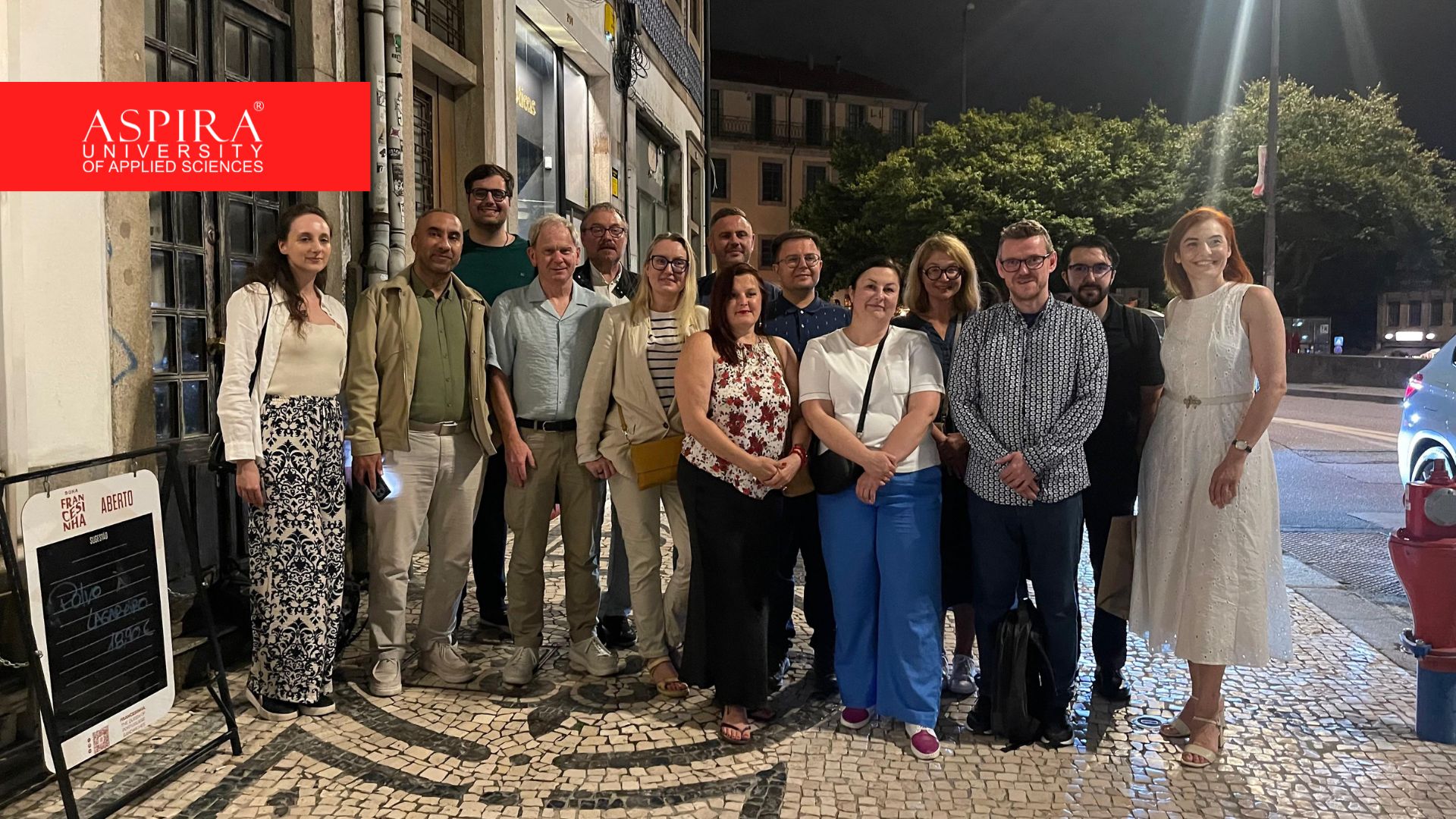
Aspira representatives, our colleagues Đurđica Vukić and Josip Radić, participated in the 3rd Transnational Project Meeting of the Erasmus+ project AI Integration Framework for Higher Education: Ensuring HEIs’ Readiness for Inescapable Transformation, held on 25–26 June 2026 at the University of Maia (UMAIA) in Portugal.
The meeting brought together project partners from Lithuania, Poland, Türkiye, Latvia, Germany, Portugal, and Croatia to review the project’s achievements, exchange experiences, and agree on the final activities to be completed before the project’s conclusion at the end of 2026.
During the two-day programme, partners presented the results achieved within the project’s work packages, including the development of guidelines for the responsible and ethical use of artificial intelligence in higher education institutions, recommendations for the use of AI tools in teaching, research, and administrative processes, as well as the training activities delivered for academic, research, and administrative staff.
Particular attention was given to the finalisation of the study module “AI Literacy and Ethics”, which will be made available to students and the wider public during autumn 2026. Partners also presented the results of the pilot implementation of the module’s thematic units, which has so far involved more than 700 students across the partner institutions. Discussions also focused on opportunities to integrate the module into existing study programmes and its future use within international educational initiatives.
In addition to the development of educational resources, the meeting focused on the dissemination of project results. Partners presented the webinars already delivered and those planned for the coming months, participation in conferences and other public events, stakeholder engagement activities, and the organisation of the final multiplier events aimed at presenting the project’s outcomes to the wider higher education community and other relevant stakeholders.
The final session of the meeting was dedicated to agreeing on the timeline for final reporting, preparing the remaining project documentation, and completing the outstanding activities to ensure the successful completion of the project and the long-term sustainability of its results.
Through its participation in this international project, Aspira continues to contribute to the development of innovative approaches in higher education and to promote the responsible, ethical, and effective integration of artificial intelligence into teaching, learning, and research.